Welcome to Terminal 3
It was a Monday morning in early August. Roughly nine months before Frankfurt Airport’s Terminal 3 would open for business. We had already done some thinking about how to celebrate the opening on the Retail Marketing side. Dr. Thomas Frank – the client at Frankfurt Airport – had already thought about bringing in Sven Väth as a DJ for the opening ceremonies. Almost a must, giving the airport’s history of once being the home of one of the most legendary Techno clubs ever.
But then another idea surfaced. One that went way beyond a ceremony, a party or even a campaign. Years before, Thomas had worked with the famous Frankfurt artist Tobias Rehberger on a project at the airport, giving his students at the Städel art school a chance to create airport related art pieces that were displayed in Terminal 1.
So… what if Tobias Rehberger were invited to bring his art to Terminal 3? Five minutes later, Thomas was on the phone, and three days later we were sitting together in the artist’s studio, discussing ways to turn parts of the terminal into pieces of art.
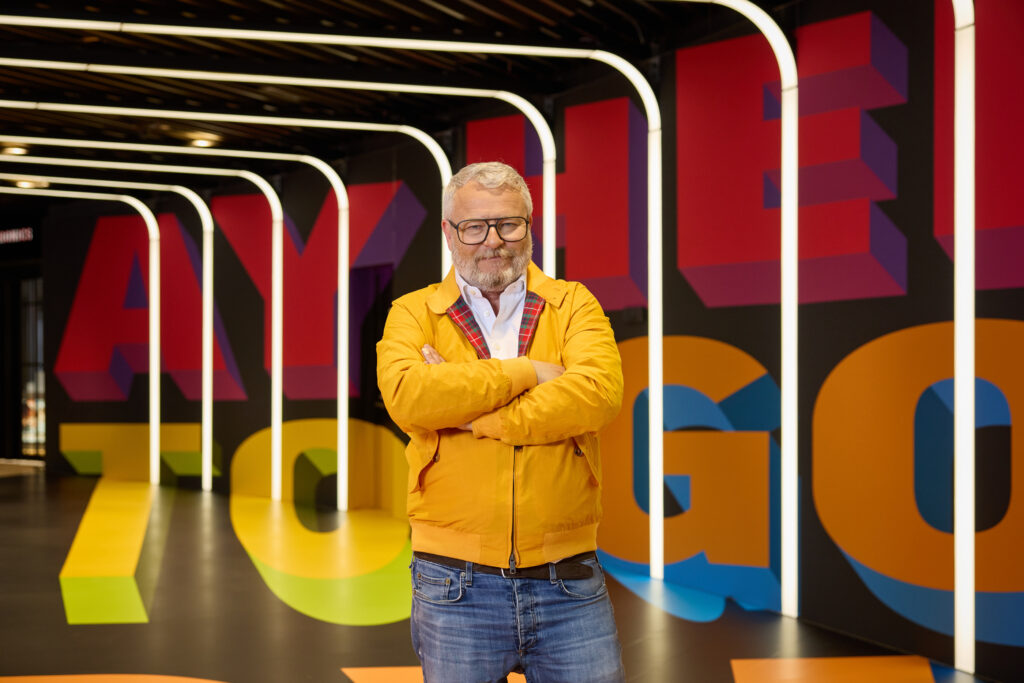
Say hello: Tobias Rehberger literally standing in his work of art
There were questions, of course. About the complications such a project would entail. All the rules and regulations, laws and standards that need to be respected – it was obvious that it would only be possible if the airport were absolutely serious about making it happen.
They were, and more interesting questions could be approached, like what and where. Rehberger’s work is not the kind of art that just stands around or hangs on walls. He creates spaces, like his famous Biennale Café in Venice in 2009.
A visit to Terminal 3 followed, and a first list of places to turn into Rehberger experiences. A gate. An empty room. A staircase. And a DJ booth – the airport regularly invites well-known DJs to play for their passengers on the airside.
Looking back, it’s amazing to see that the initial list of places and objects didn’t change much. And if it had been possible to transform a whole gate into an art experience, it would have happened as well.
That first visit at the terminal building was the starting point of the creative phase as well. Rehberger felt the atmosphere of transitions, the hellos and goodbyes, the airside and the landside, the here and there, the today and tomorrow.
Another theme that was connected to the project was the ambition of Frankfurt Airport to create a passenger experience that would reach beyond the general expectations of what is German. Somehow being German – but not so German.
Working with Tobias Rehberger was the ideal way to express this. Turning part of an airport into art? That really isn’t what people might call “typically German”. It surprises in the most positive way.
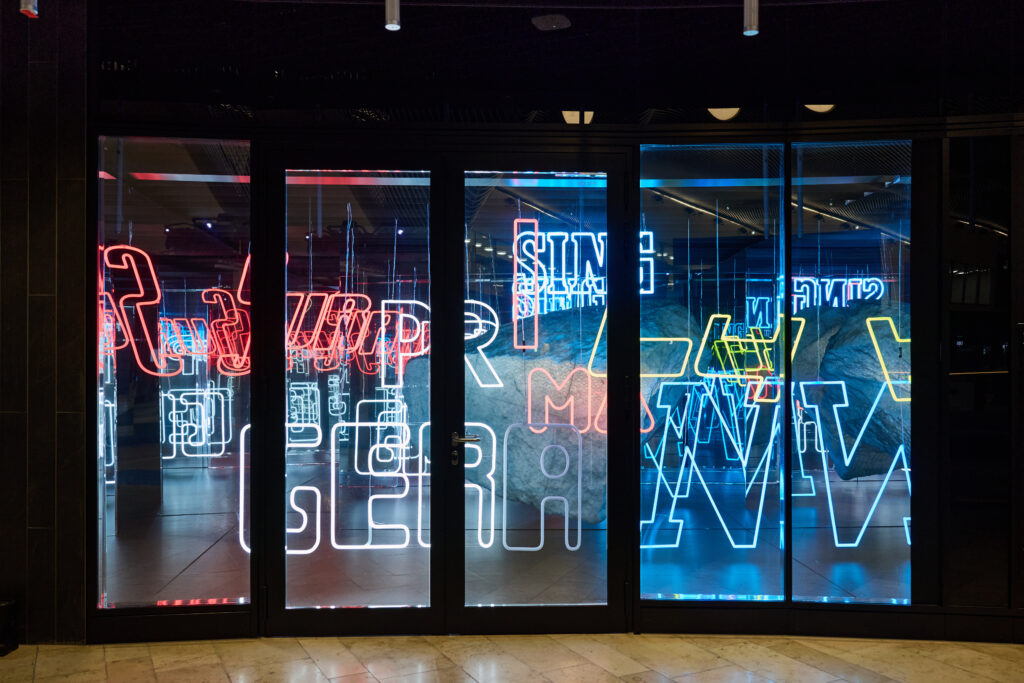
Surprisingly FRA: Giving up retail space for art
The biggest challenge on the way to the Grand Opening: even under normal circumstances, six months are alarmingly little time to turn ideas into realities. With all the complexity an airport brings along, it seemed almost impossible.
After all, an idea had to be created first, and it’s not like those just happen over a cup of coffee. Even on a super tight schedule, it was clear that production would not start anywhere before mid-January. That left about three months to build. To call that optimistic would have been putting it mildly.
There are lots of reasons why it was turned into a reality exactly on time for the Grand Opening. The artist that always found a way to adapt his work to the realities at the airport. The client that worked tirelessly to convince people, to get the necessary decisions, permissions, certificates, and to push the project forward every single day.
And there’s Epp Sales Communications, the agency that built everything. Just the other day I looked at a presentation again, one that featured all the designs for the art experiences. It’s mind-blowing to see that what was created in the end is absolutely and completely identical with the designs. Not even the slightest bit of deviation, not a single compromise. Fantastic work.
The project was even extended to elegantly support the retail campaign that celebrates the opening of Terminal 3. Tobias Rehberger created striking steles as part of the art experience, playfully inviting passengers to take a look at the shops and restaurants. There are exclusively designed artist shopping bags, and even the campaign’s coupons were created by Rehberger.
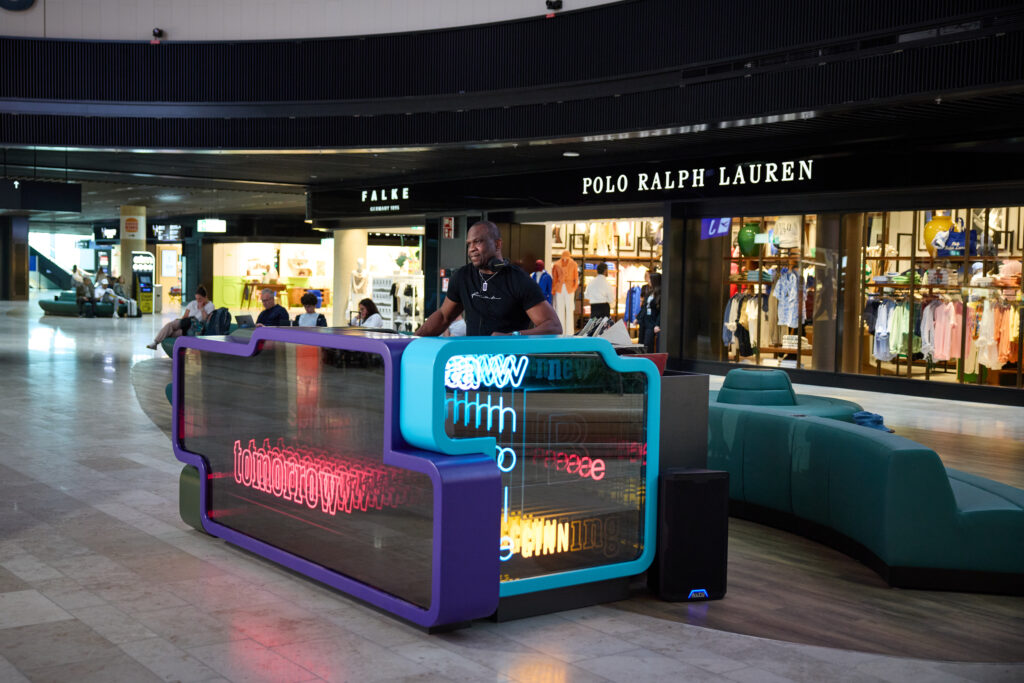
Spinning: Rehberger’s massive and beautiful DJ booth
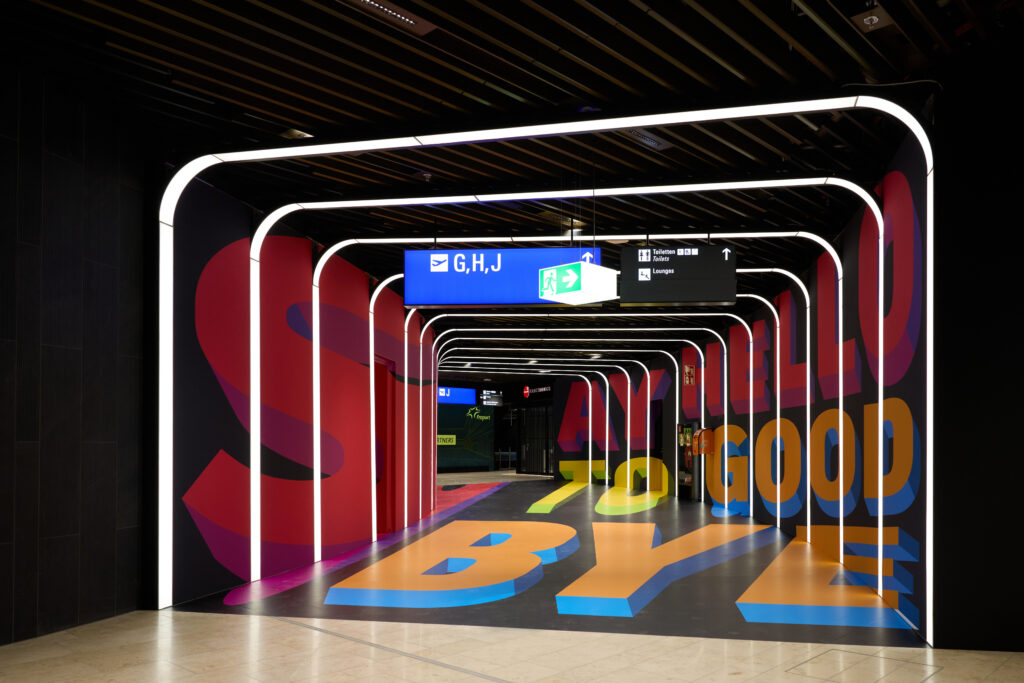
On the second day of the campaign, I had the privilege of DJing at Terminal 3. I walked through the “Say Hello To Goodbye” Tunnel, I marveled at the “Surprisingly German” installation, and I spun my vinyl standing in that awesome DJ booth. What a privilege. I was smiling for the whole five hours.
A few things remain. The project proved that it is entirely possible to combine architecture, art and retail to one inspiring experience. It showed that you don’t have to tell people things about what’s German, you can do something that has the power to adjust that perception, even if only for the time you experience it. And most importantly it shows that one person with a vision and a huge amount of persistence can make all this possible. It’s a true pleasure and inspiration to work with that person every day. Thank you, Thomas. This one is yours, and yours alone.
Photography: Oliver Rösler