
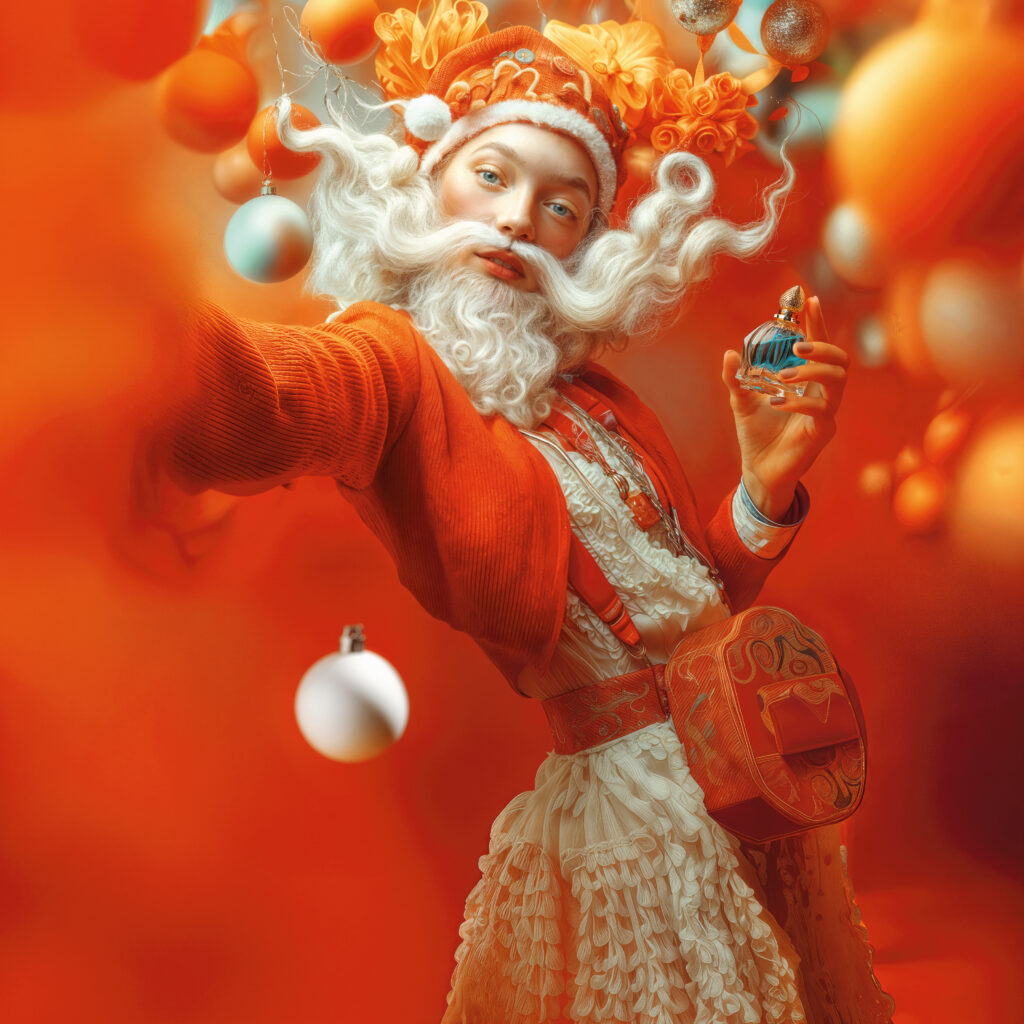
It’s the season to be jolly – and busy. It’s no secret that Christmas is the busiest season in retail, and travel retail is no exception. For the biggest and most important campaign of the year we set out to finally move forward with fully AI-generated video.
Looking at all the things people say on platforms like LinkedIn, this should be an easy task. Every day, we are presented with new examples of how outstanding and simple it is to create great video content. At the same time we keep seeing examples of AI based commercials, and almost every time the disappointment is huge.
It even reaches shitstorm levels at times. Just look at what happened to McDonald’s Christmas campaign. It was received so badly that it had to be taken down again. Yes, part of the problem wasn’t AI, the idea was of questionable quality to start with. And yet – a really good director could have turned the idea of showing difficult moments during the Christmas season into a compelling commercial. AI simply can’t do that yet. It was painfully evident in the case of McDonald’s – and almost as much in the case of Coca-Cola and their attempt at creating Christmas magic with AI. Tried it twice now, and fell short twice. Maybe next year.
The biggest problem: the egos of the ones who push these projects. Wanting more than the technology is able to deliver, pushed by a desire to shine in the spotlight of the trade press and award show stages, and being so much in love with the technology that a rational assessment of quality of craft and level of creativity is happily tossed aside.
Fact is: if you want to create fully AI based video for high resolution display, the path is long and winding, complicated and tricky. Most people think that you basically just need two AI tools, one to create the image and a second one to turn this image into motion. This isn’t totally wrong. If you want a simple enough film and if you only need it at low resolution in a typical online display environment, you might get by with Midjourney and Kling, for example.
But complex and consistent creative at 4K resolution? Nope. Especially not if you want humans to look human. Additional AIs will be needed to optimize the images, to get the necessary resolution, to turn stills into videos and to upscale again.
For every one of these stages there are multiple solutions available online, and the number of platforms offering specialized solutions keeps growing every day. And don’t think that every solution works fine with the others on your AI film production conveyor belt. From one stage to another, anything can happen. You created a lively, authentic image of daddy decorating the Christmas tree? Well, he might look like straight out of Madame Tussaud’s when you bring it up to high resolution.

Some things don’t really change, though. Midjourney is still the number one creative tool when you aim for images on professional level. And even in the optimization and upscaling, our toolbox hasn’t changed all too much – it’s still magnific and/or Topaz. For our print advertising, these tools usually do the job well.
That’s not much a surprise as the world of AI generated images has matured to an extent that gradually reduces the amount of effort needed to come up with excellent images at high resolution. The step into video is what’s turning a creator’s hair gray now.
These days, everyone will point towards Nano Banana as the one best tool for creating images that are made to be set in motion. Maybe it is, maybe not – it partly depends on what other tools you use to work on the images. And it also depends on what you want to show, what you want the images to do. One rule always applies: the more effort you have put into creating your image, the better will be the video you get. Better input leads to better output, as always.
Our campaigns for Frankfurt Airport always have people at the center, and we are getting relatively close too. Which means that we need tools that will keep our characters stable, tools that will create great detail, most importantly in eyes and skin, and not all tools are able to deliver that at the same level.
And even if you have found your ideal combination of tools – it might not be the best solution even just a month later. During the development of this campaign we worked with Kling Turbo. Why? Little or no morphing in facial features. Veo was slightly better at creating credible facial movements, especially around the eyes, but it wasn’t stable enough, morphing was too extreme.
Once we’re happy with our video, the final challenge remains: getting it to 4K resolution at the desired frame rate. This is where all the work that has been put into the preceding stages will (hopefully) pay off. It’s one thing to show a video as a pre-roll on YouTube, a completely different one to display it at 4K on a 43 square meter LED screen at Frankfurt Airport. You can see every little problem in epic dimensions. If you care to know, we used Topaz Video.
Looking at the disappointments of the latest AI-generated commercials, it’s are probably safe to say: AI will not help you if you don’t have a good idea to start with. AI is still not a smart choice if you want to create complex commercials on a specific brief. A prompter is not able to tell you which combination of tools will work best for your project. What works for campaign A may not be the right solution for campaign B. What works this month may not be the way to do it next month.
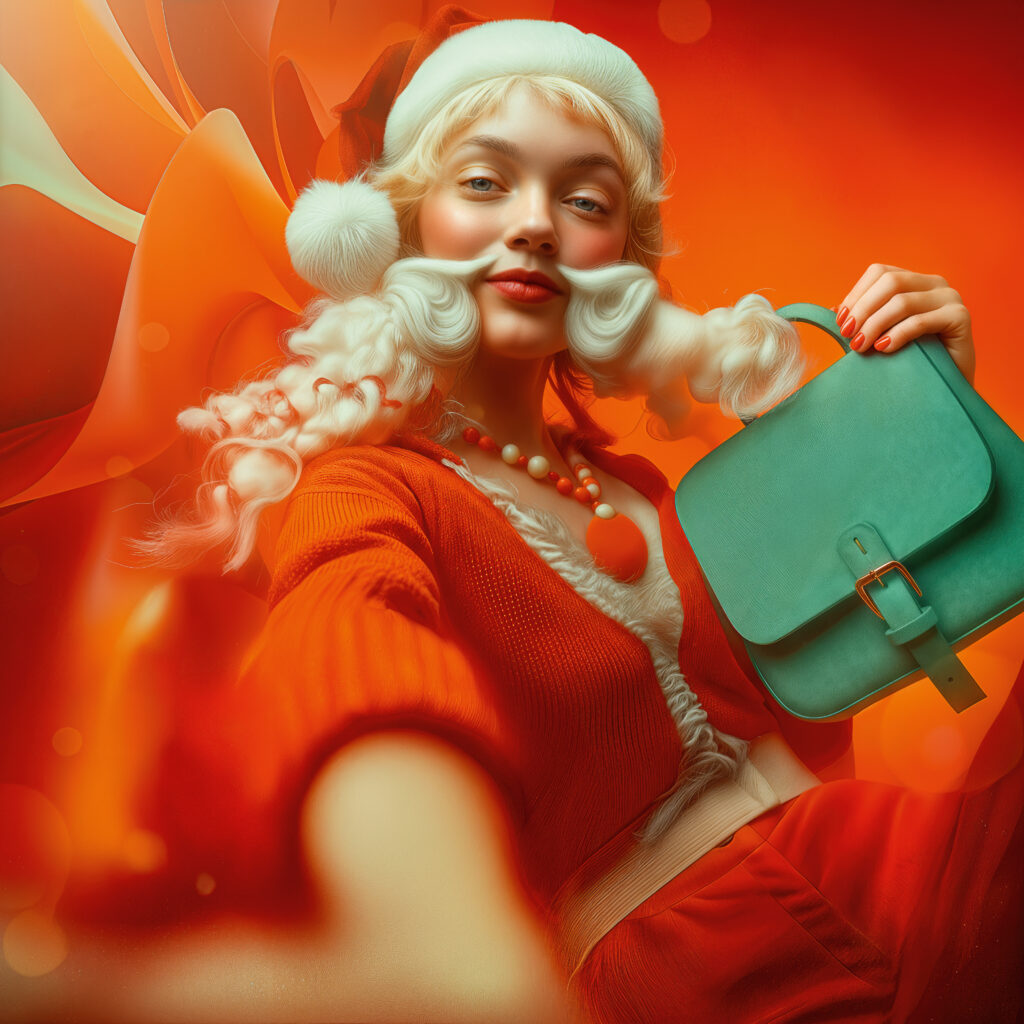
We chose to keep things simple conceptually. Stick to our campaign, create compelling and relevant images and turn them into short 20-second films that don’t try to do more than AI is able to deliver at this point in time. That’s challenging enough – especially if you don’t want to spend a fortune in post-production. Don’t believe anyone that tells you it can be done in a day or two. No way.
Naturally, everything will have changed again by the time we start to work on our next campaign – or even by the time you read this. We don’t mind that at all – we’re happy to learn new things every day. For now, big thanks go out to HP Becker at New Cat Orange for being our AI-designer-art director-tool director-editor-all-in-one-creator, and all hats off to our fearless, curiosity-driven, trustful and super supportive client at Frankfurt Airport. Let’s see how far we will have come when we do our fourth AI-based Christmas campaign in 2026.
Have a wonderful holiday season and a spectacular new year.